
How many people work each shift?
Staff numbers, shift changes and canteen hours help us estimate how much sewage arrives and when the plant will be busiest.
Industrial Sewage Treatment Plant · STP
A sewage treatment plant (STP) cleans water from factory toilets, washrooms and canteens. STP design and installation depend on workforce size, shifts and site conditions. Manufacturing wastewater needs separate assessment and may require an effluent treatment plant (ETP).
See how it works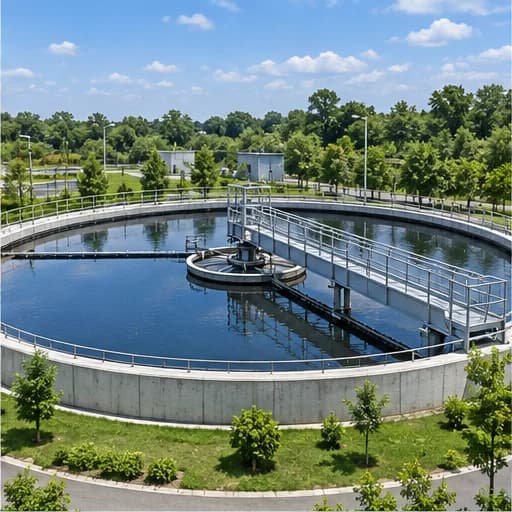
From daily use to treatment
Here is the basic idea. The exact steps depend on what is in the sewage, how much arrives and what the water will be used for next.
Screens catch larger bits of waste. A holding tank can help send water to the next step at a steadier rate.
Tiny living organisms feed on some of the waste and break it down. The plant keeps the conditions right for them to work.
Separate the organisms and leftover solids from the water, for example by letting them settle or using a fine filter.
Add any final cleaning or a step to kill germs. Test the water to check whether it is suitable for reuse or allowed to leave the site.
The bigger picture
Treated sewage may provide water for toilet flushing or green areas on the factory site. We start with the planned use, then choose the treatment and checks it needs.
Treated water may be suitable for these jobs after testing and any extra treatment. It also needs a separate pipe system so it cannot mix with drinking water.
An STP can use tiny living organisms to break down waste and a fine filter to separate them from the water. This combination is called MBR.
Understand MBRBefore choosing a system
Staff numbers, shift changes and canteen hours help us estimate how much sewage arrives and when the plant will be busiest.
Allow space for tanks, collected solids and maintenance access. Consider nearby work areas when planning ventilation and odour control.
Plan daily checks, cleaning and removal of collected solids. The plant must also cope with quieter shifts, weekends and factory shutdowns.
Let’s talk about cost
The cost has two parts: putting the sewage treatment plant in place and looking after it every day. Buying the equipment is the beginning.
You pay for the tanks, pumps, treatment equipment and the work needed to connect them to the building. The number of people using the site helps decide how big the system needs to be.
The plant needs electricity, regular checks, cleaning and repairs. Water testing, sludge removal and any chemicals used for treatment add to the running bill.
A factory running one shift sends a different amount of sewage to treatment from a site running around the clock. Workforce size, available space and planned water reuse affect the cost.
A little clarity
Your water. Your requirements.
Tell us where your wastewater comes from, roughly how much you have each day and what you want to use it for. Share any water test results you have.
Based in Perundurai, Erode, Tamil Nadu. Serving Tamil Nadu, South India and India.