Is it thick, sticky or heat-sensitive?
Some liquids are thick or sticky; others change when heated. These differences affect whether this dryer is suitable.
Agitated Thin Film Dryer
An agitated thin film dryer (ATFD) removes moisture from concentrated liquid. Moving blades spread a thin layer across a heated wall. Water leaves as vapour and drier material is collected, with both outputs handled as part of the treatment plan.
See how it works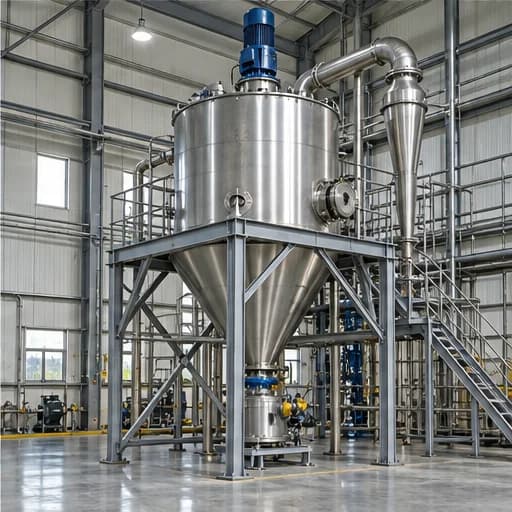
Inside the dryer
Inside the dryer, a turning shaft with blades keeps spreading and moving the material against the hot wall. Heat turns moisture into vapour. The movement helps expose more of the material to the drying surface.
The bigger picture
Taking water out can make the leftover waste easier to collect. Drying does not remove every harmful substance or turn the waste into something we can automatically sell.
Test what is left, then choose a suitable way to store it and dispose of it or recover useful material.
The water vapour leaves separately. Equipment cools it back into liquid, with extra treatment where needed.
An evaporator can remove some water first. This leaves less liquid for the dryer to handle.
Explore MEEBefore choosing a system
Some liquids are thick or sticky; others change when heated. These differences affect whether this dryer is suitable.
Decide how dry the material needs to be and how it will be collected. Not every liquid becomes a loose powder.
Choose equipment that can handle the material and heat. Leave room for cleaning and repairs, and plan where the vapour goes.
Let’s talk about cost
A dryer needs energy to remove moisture. Its cost covers the machine, the heat to dry the material and the work needed to look after what comes out.
You pay for the dryer, its rotating parts, heating equipment and controls. Equipment to collect vapour and dried material, plus installation, needs to be included in the agreed scope.
Budget for heat, electricity, cleaning and maintenance. The dried material still needs storage and a suitable destination, which can add handling and disposal costs.
A wetter or stickier feed can behave very differently in a dryer. How much material you process, how dry it must become and how it affects the equipment all influence the cost.
A little clarity
Your water. Your requirements.
Tell us where your wastewater comes from, roughly how much you have each day and what you want to use it for. Share any water test results you have.
Based in Perundurai, Erode, Tamil Nadu. Serving Tamil Nadu, South India and India.