What is in the water?
Testing samples from normal factory work tells us what needs removing.
Effluent Treatment Plant · ETP
An effluent treatment plant (ETP) treats wastewater from industrial processes. It removes dirt, oil and other waste in stages, with each stage chosen for what is in your water.
Based in Perundurai, Erode, we plan ETP design and installation for industrial sites across India. Water tests, daily flow and site conditions guide the design. We check the quality needed for reuse or permitted discharge before choosing equipment.
See how treatment works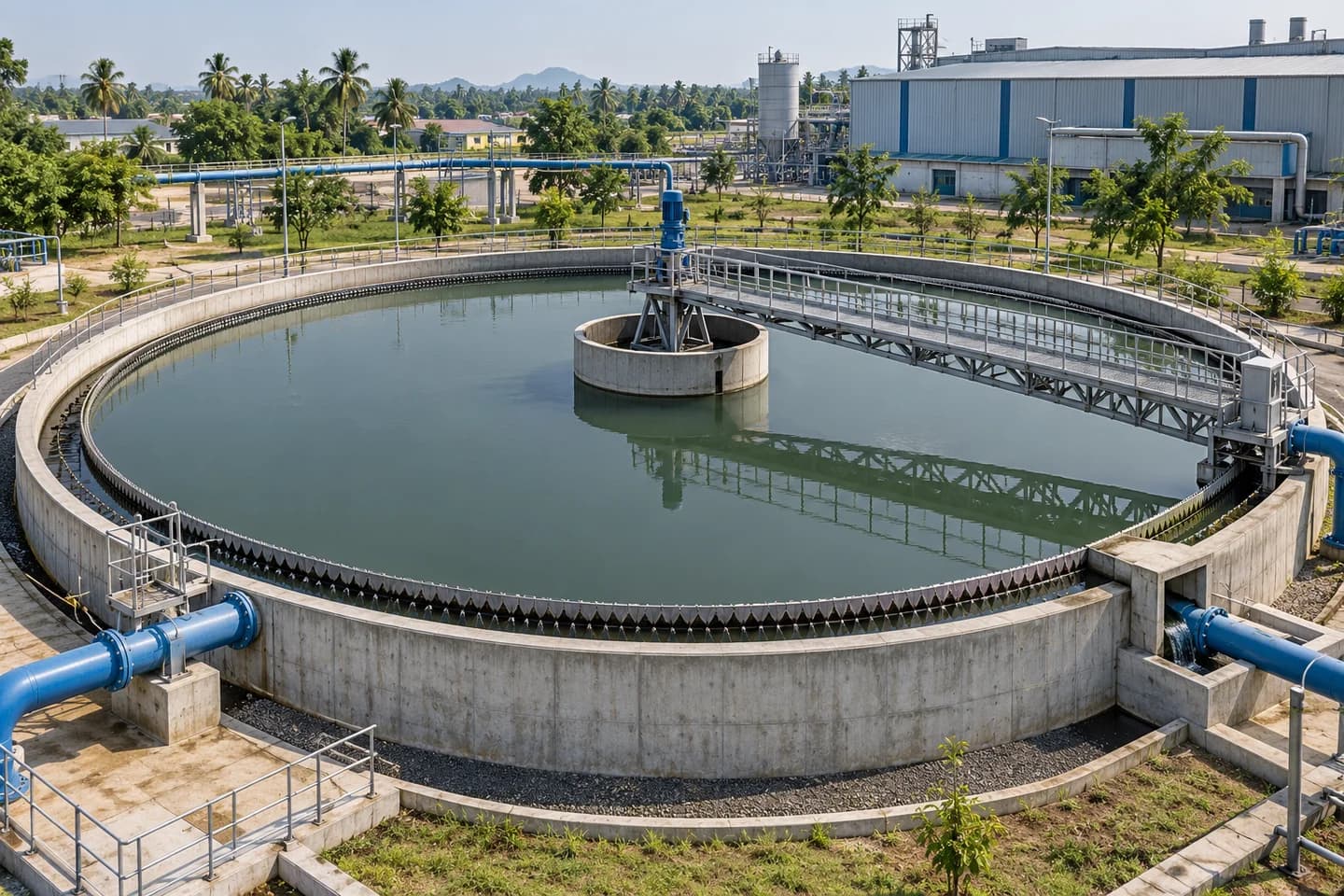
In everyday terms
Imagine water mixed with grit, oil and dissolved waste. A screen can catch larger pieces, but it cannot remove everything. An ETP combines different methods because each kind of waste needs a different approach.
Follow the water
Here are four jobs an ETP may do. Your water may need a different order or fewer steps; testing helps us choose.
Screening & equalisation
A screen catches larger pieces of waste. A holding tank collects the water so the next steps receive a steadier flow, even when the factory sends water in bursts.
Physical & chemical treatment
Some dirt is too fine to catch easily. The right chemicals can help it clump together for removal. Other chemicals may be needed if the water is too acidic or too alkaline.
Biological treatment, where suitable
Tiny living things called microorganisms use some waste as food and break it down. This only works when the water contains suitable waste and does not harm them.
Final cleaning & water testing
Remove leftover solids and add any extra cleaning steps. Then test the water to see whether it is suitable for its next use or allowed to leave the site.
Designed around the end use
Think of salt stirred into a glass of water. You cannot see it, but it is still there. Factory water can also contain things we cannot see, so we test it.
A special filtering step called reverse osmosis, or RO, can reduce dissolved salt when the next use needs it.
Explore reverse osmosisAn ETP can work with other equipment to recover more water for reuse and handle the waste left behind.
Compare treatment solutionsBefore choosing equipment
Testing samples from normal factory work tells us what needs removing.
The amount of water each day, including busy periods, helps us choose tank sizes and plan how to run the plant.
Water for reuse may need different treatment from water allowed to leave the site. We check what quality is needed.
Let’s talk about cost
ETP plant costs include design, equipment and installation, followed by the cost of daily operation. The treatment steps your wastewater needs shape both budgets.
Tanks hold the water, pumps move it and treatment equipment removes pollution. The starting cost also includes the site work, pipes, wiring and installation agreed in your quote.
Budget for electricity, people to operate the plant, water tests, maintenance and any treatment chemicals. The sludge collected during treatment also needs to be handled and taken to a suitable destination.
Two factories can use the same amount of water but leave very different pollution in it. Water that needs more treatment can need more equipment and more work each day.
A little clarity
Your water. Your requirements.
Tell us where your wastewater comes from, roughly how much you have each day and what you want to use it for. Share any water test results you have.
Based in Perundurai, Erode, Tamil Nadu. Serving Tamil Nadu, South India and India.